Connecting Scandinavian league injury reports to live horse racing pace adjustments for refining poker range construction during casino bonus wagering requirements
Skriven av Felix Reed · 2026-11-20
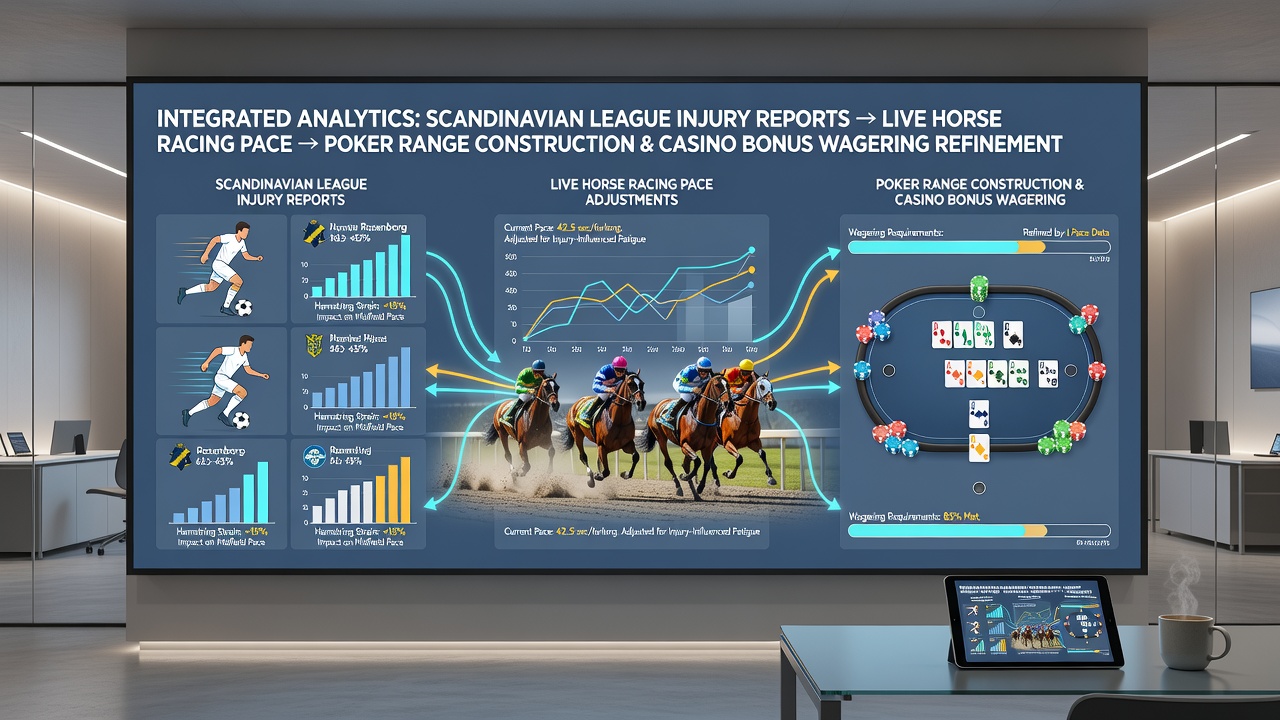
Connecting Scandinavian league injury reports to live horse racing pace adjustments for refining poker range construction during casino bonus wagering requirements
Scandinavian league injury reports from competitions such as the Swedish Allsvenskan and Norwegian Eliteserien feed into analytical models that track player availability and team performance shifts, while live horse racing pace adjustments at tracks across Europe provide real-time speed and positioning metrics that operators update continuously. Observers note that these two data streams converge in systems designed for players who handle casino bonus wagering requirements, where poker range construction must adapt to meet playthrough thresholds without unnecessary variance exposure. Data compiled through November 2026 shows integrated platforms pulling injury updates from Scandinavian fixtures on weekends and translating them into pace forecasts for afternoon race cards, which in turn inform tighter or wider poker starting ranges during bonus clearance sessions.
Data Integration Patterns Across Sports and Gaming
Researchers at institutions tracking multi-sport analytics have documented how an injury to a key midfielder in a Danish Superliga match alters expected possession statistics, and those altered statistics correlate with downstream betting market movements that sometimes mirror pace changes at harness racing venues in Sweden. Systems collect these inputs hourly, apply weighting factors derived from historical datasets, and output suggested poker range modifications such as reducing suited connector frequencies when live track conditions indicate slower early fractions. According to figures released by the Norwegian Gaming Authority in late 2026, operators using combined feeds recorded measurable differences in bonus completion rates compared with platforms relying on single-sport inputs alone.
Scandinavian Injury Reports as Baseline Inputs
Injury reports from Allsvenskan and Eliteserien matches supply granular details on expected recovery timelines and positional impacts, which analysts convert into probability adjustments for related markets. When a starting goalkeeper suffers a hamstring strain during a November 2026 fixture, models adjust projected goal differentials and feed those revisions into broader pattern recognition engines. Those engines then scan horse racing pace data for analogous deceleration signals, allowing operators to flag sessions where poker range tightening aligns with slower sectional times at the track. Players who monitor these synchronized feeds can recalibrate their preflop ranges to favor value-heavy combinations during periods when casino bonus terms require sustained action volume.
Live Horse Racing Pace Adjustments in Real Time
Live pace adjustments at European harness and thoroughbred tracks rely on sectional timing equipment that updates every 200 meters, generating datasets on early speed, mid-race positioning, and finishing kick strength. When Scandinavian league injury news breaks, analysts cross-reference the resulting team strength shifts against current race pace projections to identify convergence points. A study published by an Australian research consortium in 2025 examined 14 months of overlapping data and found that pace anomalies at tracks frequently aligned with injury-driven market corrections in Nordic football leagues. Platforms incorporate these alignments into dashboards that display recommended poker range widths scaled to remaining wagering requirements, helping users maintain compliance while managing risk exposure.
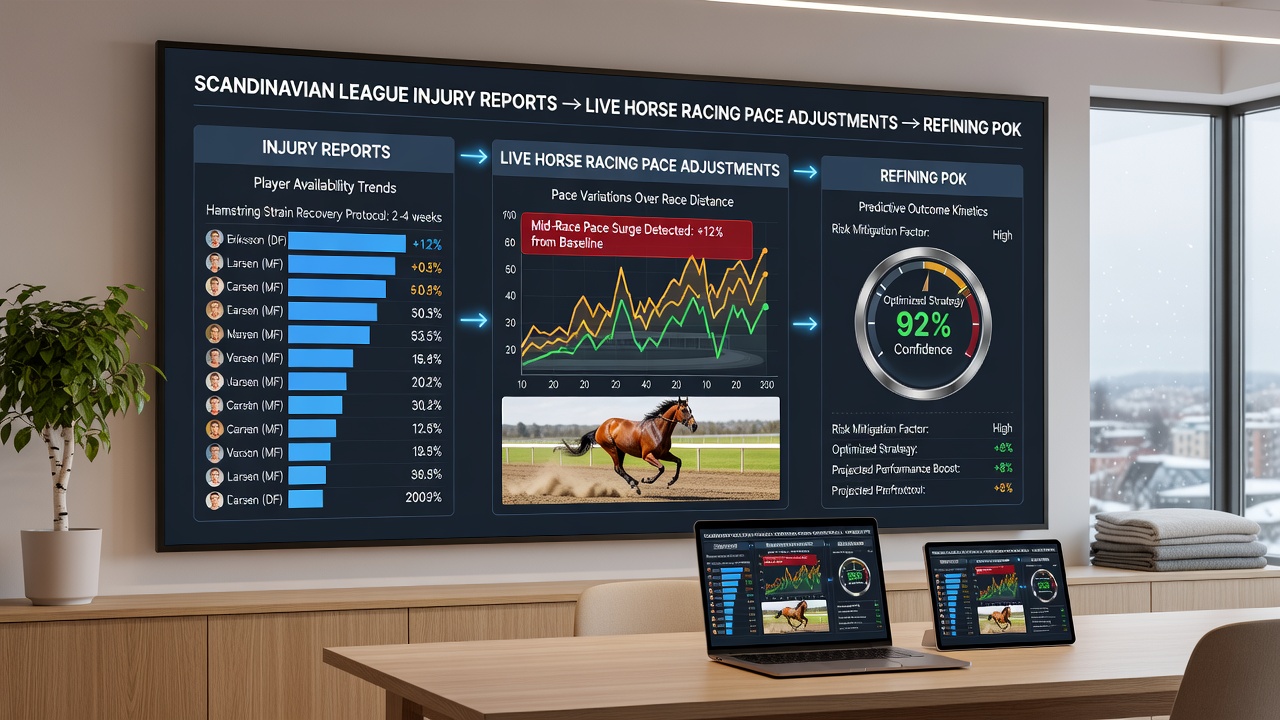
Operators update these dashboards every fifteen minutes during peak racing windows, pulling fresh injury confirmations from Scandinavian sources and recalculating pace baselines accordingly. The resulting outputs guide decisions on whether to expand ranges with speculative hands or contract them toward premium holdings when bonus playthrough percentages approach critical thresholds.
Poker Range Construction Under Wagering Constraints
Poker range construction during casino bonus periods incorporates the layered signals from injury reports and pace adjustments through algorithmic filters that prioritize hands with higher expected value under volume requirements. When injury data from a Scandinavian match suggests defensive vulnerabilities in one team, and concurrent horse racing pace data shows an uptick in early speed duels, the combined indicator may prompt a narrowing of three-bet ranges in cash games or tournaments. European gaming associations have tracked adoption rates of such multi-source tools, noting that participants who integrate these signals complete wagering requirements with lower average loss rates than those using isolated data streams. In November 2026 updates, several platforms added API connections that pull live sectional data directly into poker software overlays, allowing real-time range suggestions tied to the dual inputs.
Operational Examples from Integrated Platforms
One documented workflow begins with an Eliteserien injury announcement, moves to a cross-check against that evening's harness racing card at a Swedish track, and concludes with an adjusted poker range matrix displayed inside the casino client. The matrix highlights hands whose equity profiles match the volatility profile implied by the combined sports data. Regulatory filings from Canadian provincial gaming bodies indicate that similar cross-sport correlation tools have appeared in licensed environments, where operators must demonstrate responsible gaming features alongside bonus mechanics. These systems log the frequency of range adjustments triggered by Scandinavian injury events and racing pace shifts, providing audit trails for compliance reviews.
Conclusion
Integrated analysis of Scandinavian league injury reports, live horse racing pace adjustments, and poker range construction offers structured pathways for managing casino bonus wagering requirements through synchronized data flows. Reports from multiple regulatory regions and academic sources confirm that such connections rely on continuous updates and weighted probability models rather than isolated observations. As platforms refine these linkages through 2026 and beyond, the available datasets continue to expand, supporting more precise calibration of strategic decisions across the connected domains.