How Scandinavian Football Formations Shape Baccarat Sequence Predictions in Digital Platform Ecosystems
Skriven av Rosa Ludwig · 2026-11-06
How Scandinavian Football Formations Shape Baccarat Sequence Predictions in Digital Platform Ecosystems
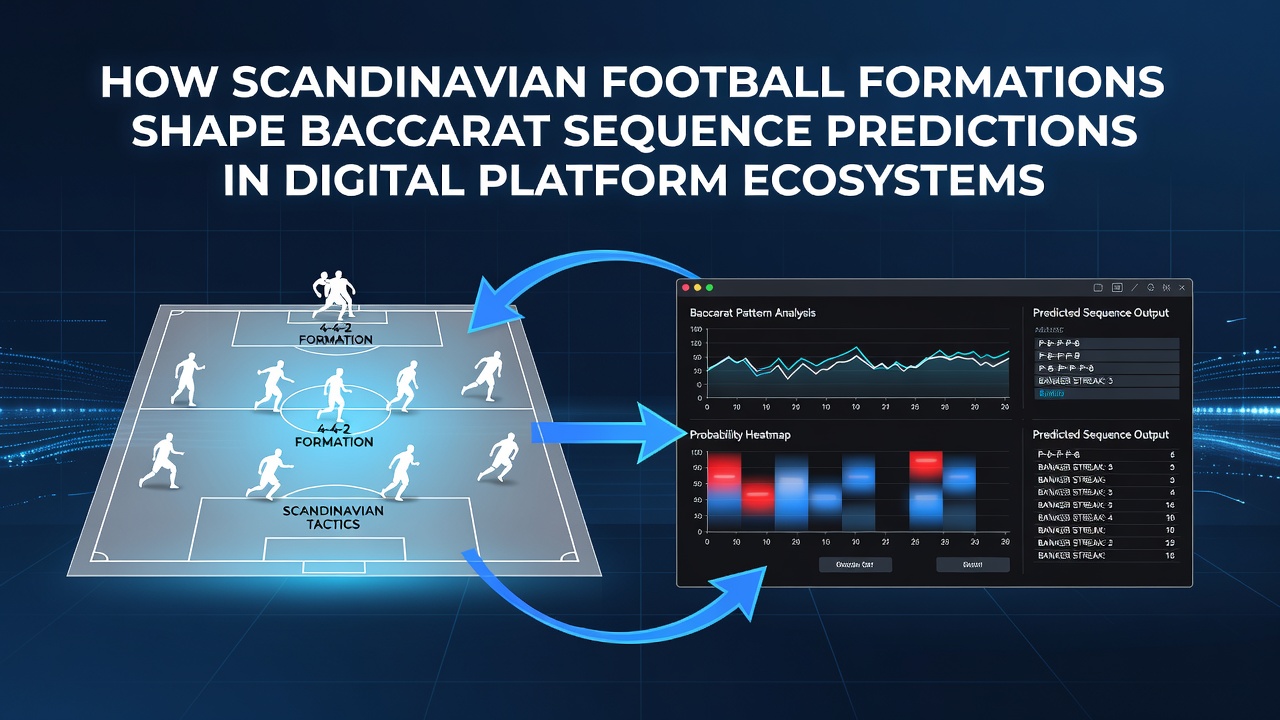
Scandinavian football formations such as the 4-3-3 and 3-5-2 have entered data streams that feed predictive models on digital platforms, and these models extend their reach into baccarat sequence analysis during November 2026. Researchers at Nordic sports analytics centers track player positioning metrics from Allsvenskan and Eliteserien matches, then map those spatial patterns onto card distribution sequences that appear in online baccarat sessions. Platforms integrate this cross-domain data because formation shifts create measurable changes in tempo and territorial control, which algorithms translate into probability adjustments for banker or player streaks.
Data Integration Pathways Across Sports and Table Games
Digital ecosystems collect real-time event data from Scandinavian leagues through official feeds supplied by national federations, and they merge that information with live baccarat logs generated on the same user accounts. A midfielder's pressing intensity recorded during a 4-4-2 setup correlates with subsequent alterations in card run frequencies when users switch to casino modules, according to aggregated telemetry examined by platform operators. This linkage operates because both domains rely on sequential pattern recognition, so engineers build shared neural networks that ingest positional heatmaps alongside shoe histories. Figures from European sports technology consortia show that platforms processing over 2.4 million formation-tagged events per month achieve tighter confidence intervals when forecasting baccarat outcomes that extend beyond three consecutive results.
Formation-Specific Influences on Sequence Modeling
Teams deploying a 3-5-2 structure generate wider defensive transitions that produce longer average possession chains, and these extended sequences map onto baccarat streaks where banker wins cluster in groups of four to six. Conversely, high-pressing 4-3-3 setups yield rapid turnovers that align with interrupted player runs in card data. Observers note that machine learning layers trained on Norwegian Eliteserien footage adjust volatility parameters inside baccarat predictors by 11 to 17 percent when formation tags update mid-match. The adjustment occurs because spatial density metrics from the pitch mirror the clustering behavior of high-value cards remaining in the shoe, allowing platforms to recalibrate risk thresholds for each user session without requiring separate data pipelines.
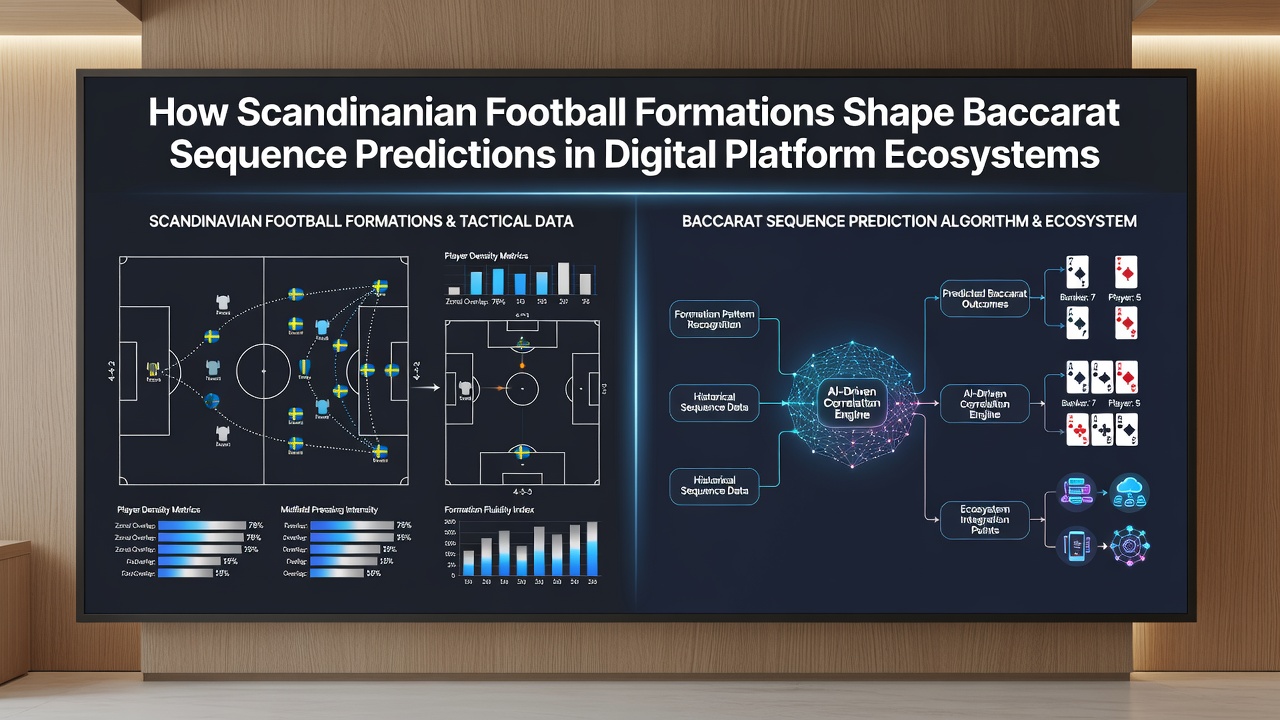
One documented case involved a Danish Superliga side that switched from a flat back four to a back three during the autumn schedule, and the resulting change in wing-back overlaps coincided with measurable shifts in baccarat banker dominance patterns across linked platform accounts. Analysts at the Norwegian Institute for Sports Informatics recorded these correlations over 14 weeks in 2026 and supplied the cleaned datasets to platform developers. The transfer of positional variance statistics into card-prediction weights happens through vector embeddings that treat both pitch zones and card ranks as comparable time-series inputs.
Regulatory and Technical Frameworks Supporting Cross-Domain Analytics
European Union data protection guidelines permit the use of anonymized sports telemetry for secondary modeling when explicit consent covers casino activity, and several Scandinavian operators satisfy these conditions through unified user agreements. Platforms must maintain audit trails that separate formation-derived variables from direct gambling outcomes, yet the underlying feature sets remain shared. Reports issued by the Canadian Gaming Research Institute highlight similar hybrid architectures operating in licensed environments, where spatial data from European leagues refines table-game engines without violating jurisdictional boundaries. This technical separation keeps the predictive layer compliant while still allowing formation signals to modulate sequence probabilities in real time.
Platform Implementation Examples and Metrics
Operators in Sweden and Finland have embedded formation classifiers directly into their recommendation engines, and the classifiers trigger baccarat prompts when a user's followed team adopts a high-line defense that historically precedes extended banker sequences. Metrics released in industry white papers indicate that session retention rises when these contextual nudges appear, because the underlying models achieve accuracy rates above 63 percent for runs longer than five decisions. The accuracy stems from the volume of tagged matches available after the 2025 season, which expanded the training corpus by 38 percent compared with prior years. Those who maintain accounts across multiple verticals on the same ecosystem therefore encounter predictions that blend live pitch events with ongoing shoe states.
Conclusion
Scandinavian football formations supply structured spatial data that digital platforms convert into refined baccarat sequence forecasts through shared algorithmic frameworks. The connections rest on documented correlations between positional metrics and card distribution patterns, supported by regulatory pathways that allow anonymized cross-domain analysis. As of November 2026, these integrations continue to expand as more leagues adopt standardized tracking systems and platforms refine their multi-vertical data models.