Seasonal equine metrics and their role in refining live football wager adjustments during poker bonus cycles
Skriven av Petra Becker · 2026-10-23
Seasonal equine metrics and their role in refining live football wager adjustments during poker bonus cycles
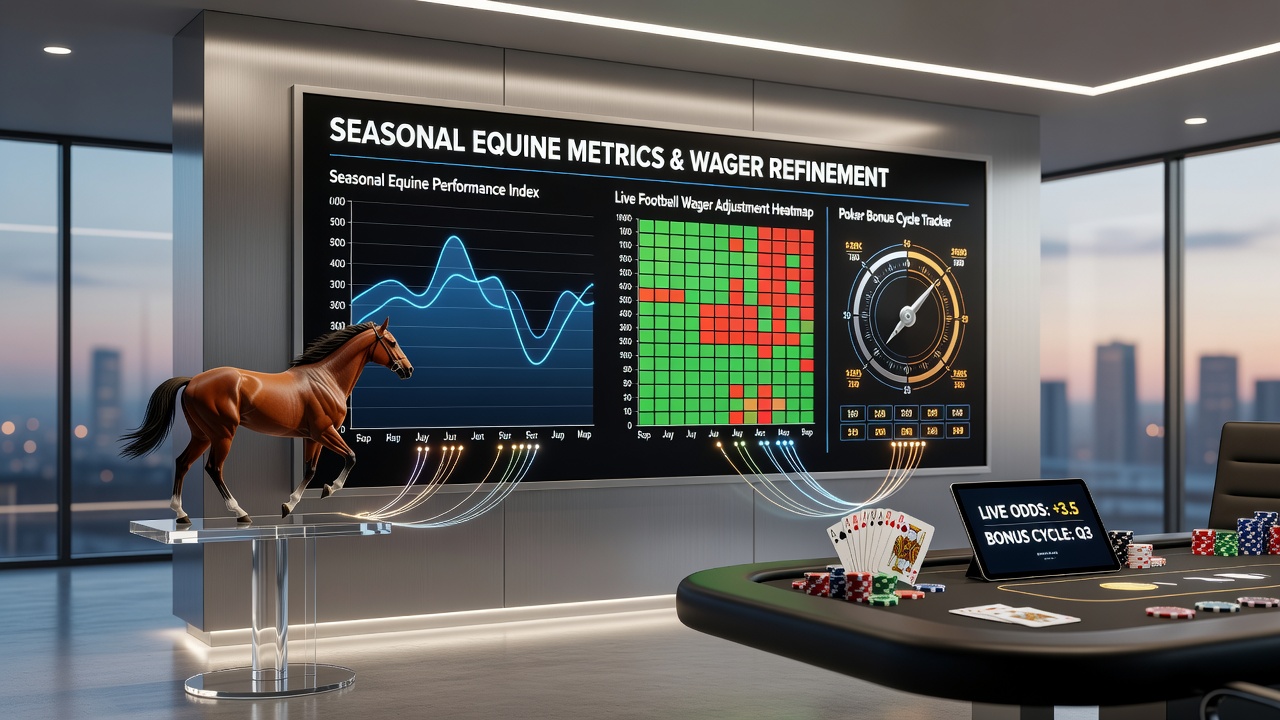
Seasonal equine metrics encompass performance indicators from horse racing that vary with weather patterns, track surfaces and training cycles while these data points feed into algorithmic models used by betting operators to recalibrate live football wager lines particularly when poker bonus cycles increase platform activity across multiple product verticals and in October 2026 several European and North American operators reported synchronized updates to their risk engines that incorporated equine recovery statistics from the previous northern hemisphere summer season.
Core Components of Seasonal Equine Data Sets
Equine performance records collected by regulatory bodies and industry research groups include variables such as average speed over distance, post-race lactate levels and seasonal injury incidence rates while organizations like the Australian Gambling Research Centre have documented how these metrics shift between spring and autumn campaigns and operators integrate the resulting trend lines into predictive frameworks that also monitor football match dynamics in real time.
Data collection protocols typically log environmental conditions at racecourses alongside biometric readings from competing animals and analysts note that autumn races in temperate climates often produce slower recovery intervals compared with summer events which in turn influences the weighting applied to football live-bet volatility calculations during overlapping promotional windows.
Live Football Market Adjustments and Cross-Vertical Data Flows
Live football wager adjustments rely on continuous streams of in-game statistics yet platforms have begun layering equine seasonal indicators into the same risk-management layers because observed correlations appear between horse racing form cycles and broader betting volume spikes and when poker bonus cycles activate they frequently coincide with elevated cross-product participation that amplifies small statistical edges derived from equine data sets.
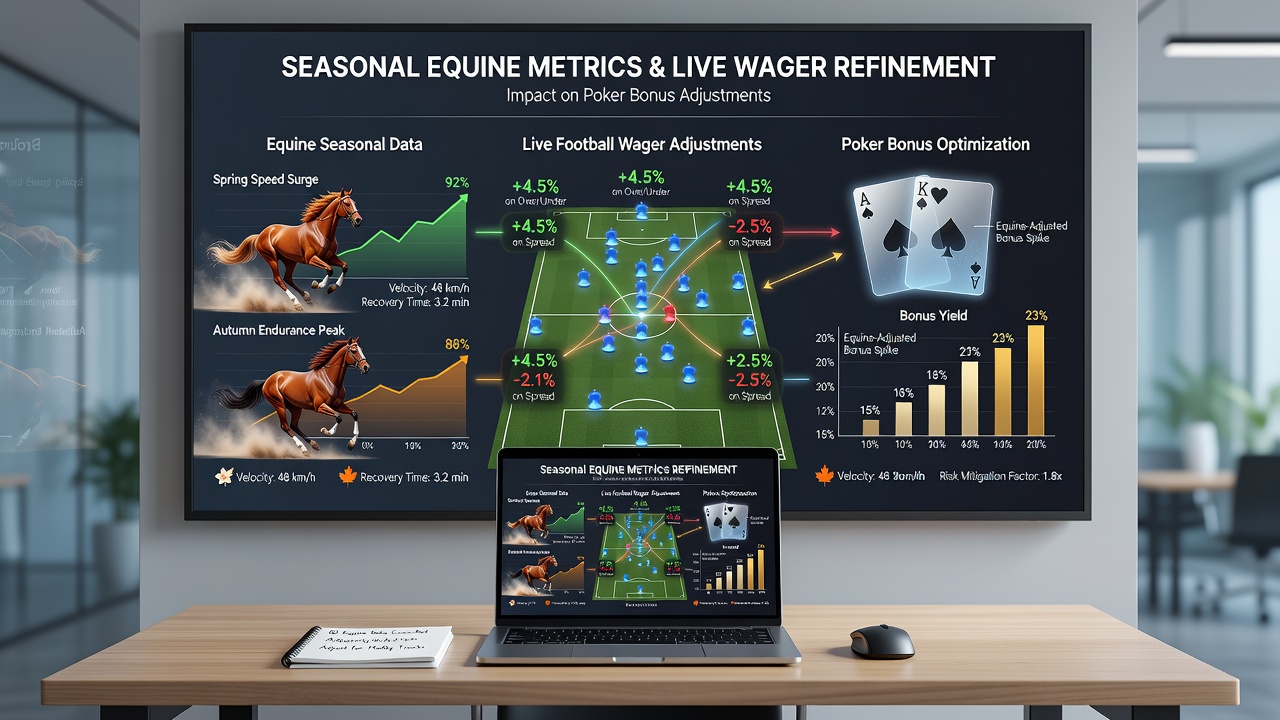
Operators monitor football corner counts and expected goal differentials in parallel with equine speed figures from recent meetings and one documented workflow routes normalized equine fatigue indices into football over-under thresholds so that a cluster of slower recovery times in the preceding equine season can trigger tighter limits on high-variance football markets during the same hours that poker reload bonuses are distributed.
Poker Bonus Cycle Timing and Platform-Wide Effects
Poker bonus cycles follow scheduled calendars that often align with major equine racing festivals and industry reports indicate that October activations historically generate measurable lifts in football live-bet handle because bonus recipients explore additional verticals adn the same platforms use equine performance baselines to moderate exposure levels across those football lines thereby maintaining internal risk parameters while user traffic rises.
Canadian provincial regulators have required periodic disclosures of such multi-product risk models and the resulting filings reveal that equine seasonal adjustments account for measurable portions of football market recalibrations during peak bonus windows although exact weighting formulas remain proprietary.
Analytical Integration Methods
Statistical teams apply regression techniques that treat equine recovery intervals as lagged variables within football model ensembles and these ensembles update at intervals ranging from thirty seconds to two minutes during live events while the presence of active poker bonuses expands the sample size of user-initiated wagers thereby increasing the statistical power of any equine-derived signals embedded in the system.
Validation studies conducted by academic groups have compared forecast accuracy before and after the inclusion of seasonal equine metrics and results show incremental improvements in calibration metrics for certain football markets although the magnitude varies with the geographic distribution of participating users.
Conclusion
Seasonal equine metrics supply additional input variables that operators combine with live football statistics to modulate wager parameters during periods of heightened poker bonus activity and the practice has become more visible in regulatory filings and industry research reports through 2026 while the underlying data integration continues to evolve alongside advances in real-time analytics platforms.